

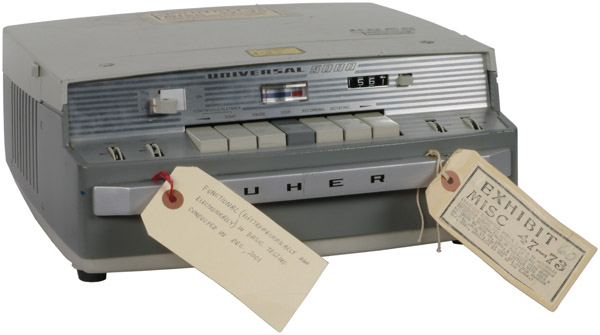

Everyone knows someone who was laughed at for a theory that later made the news. We've ranked ten on the story alone. Number ten is a spy chief and a very careful word. Number one is a president, a tape recorder and a Supreme Court. Argue below.
10 Snowden and PRISM: the surveillance people were told they imagined
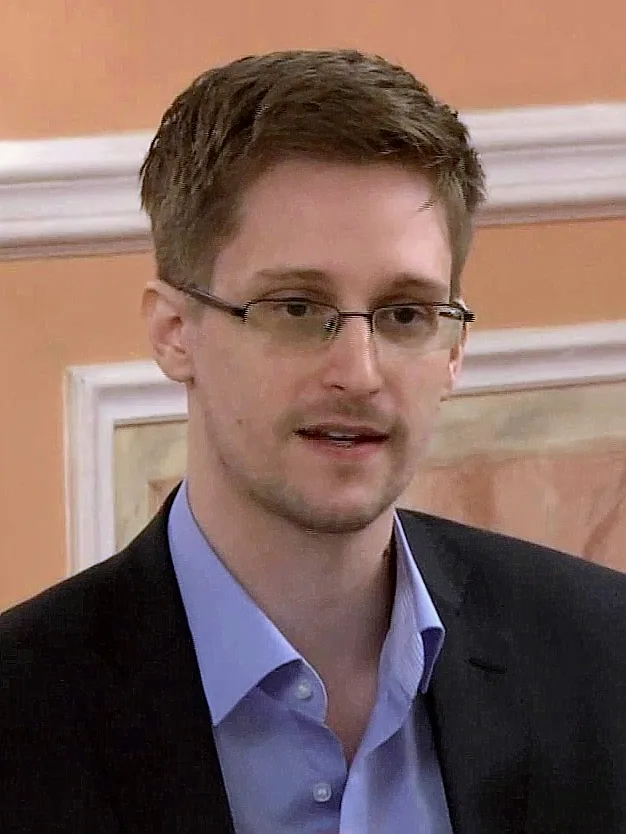

In March 2013 Senator Ron Wyden asked the Director of National Intelligence, James Clapper, a simple question: does the NSA collect any type of data on millions of Americans? Clapper said no, or at least 'not wittingly'. Three months later a 29-year-old contractor, Edward Snowden, was the source behind the Guardian story on a secret court order. Dated 25 April 2013, it told Verizon to hand the NSA an 'electronic copy' of its call records every day. Then came PRISM, a programme dating back to 2007. Clapper wrote to apologise for his answer, calling it erroneous, and had earlier called it the 'least untruthful answer' he could give. In 2020 a US appeals court ruled the phone programme illegal. Nobody was prosecuted for lying to Congress.
Why it’s here: A great denial and a hard fall, but a story told mostly in paperwork.
Share this item

9 Operation Northwoods: the Pentagon's plan to fake attacks on Americans
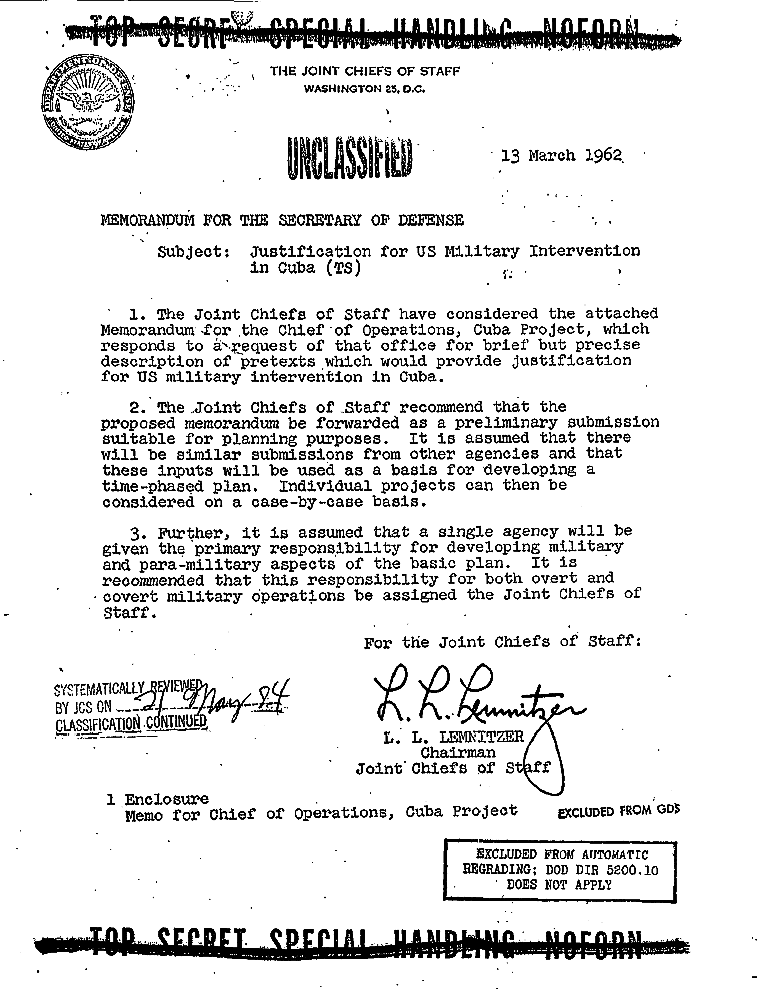

In March 1962, the Joint Chiefs of Staff sent the defence secretary a Top Secret memo called 'Justification for US Military Intervention in Cuba'. Chairman Lyman Lemnitzer signed it. The Bay of Pigs had flopped the year before, and the generals wanted a reason to try again. Their answer was to stage one. Blow up a US Navy ship at Guantanamo Bay and blame Cuba. Run a fake terror campaign in Miami. Paint F-86s to look like Cuban MiGs. Build a drone identical to a civilian airliner, load the real airliner with passengers under false names, swap in the drone, then destroy it. Kennedy and McNamara said no. Lemnitzer was moved to NATO within months. The memo stayed secret until 1997.
Why it’s here: Jaw-dropping on paper, but it was only ever a proposal, so it sits near the bottom.
Share this item

8 Gulf of Tonkin: the second attack that never happened
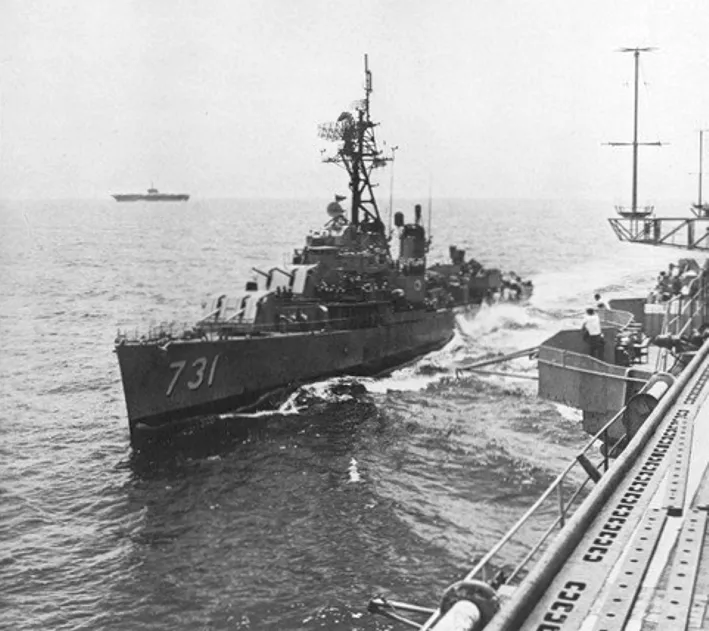

On 2 August 1964 North Vietnamese torpedo boats really did attack USS Maddox. Two nights later, on an exceptionally dark, drizzly night, the Maddox and the Turner Joy reported being under attack again. Then it got odd. The Maddox's sonar reported 26 torpedoes, though North Vietnam had only 12 boats carrying two each. The Turner Joy's sonar detected none. Crews could see no other ships, and the only wakes were their own. Washington didn't wait. The Senate passed the Gulf of Tonkin Resolution 88 to 2, and the administration used it to escalate fast. Robert McNamara later admitted the second attack never happened. Shortly after the vote, Johnson told George Ball: "Hell, those damn, stupid sailors were just shooting at flying fish."
Why it’s here: A real attack, a phantom second one, and a war built on the difference.
Share this item

7 Iran 1953: the coup the CIA eventually put in writing
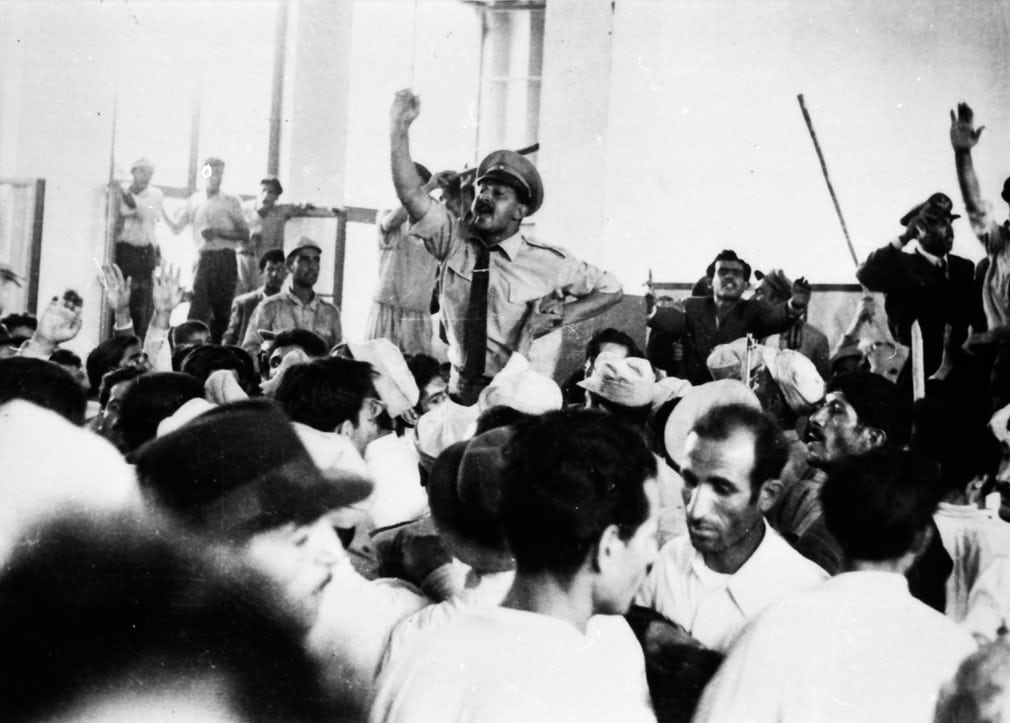

In 1953 Iran's prime minister, Mohammad Mossadegh, threatened British oil interests. Britain proposed a coup and the CIA drew up the plan. Its first try collapsed when the colonel serving the dismissal decree was arrested, and the Shah fled to Rome. So the CIA hired some of Tehran's most feared mobsters to stage pro-shah riots. Mossadegh had banned demonstrations, so his own supporters stayed home. About 300 people died and he fled. He got three years in prison, then house arrest for life. The CIA later said the coup records were lost because the safes were too full. Iranian bookstores sold the 200-page history anyway.
Why it’s here: A long-known open secret with strong daft details, but the admission is late and the twist mild.
Share this item

6 COINTELPRO: the FBI's secret war on activists
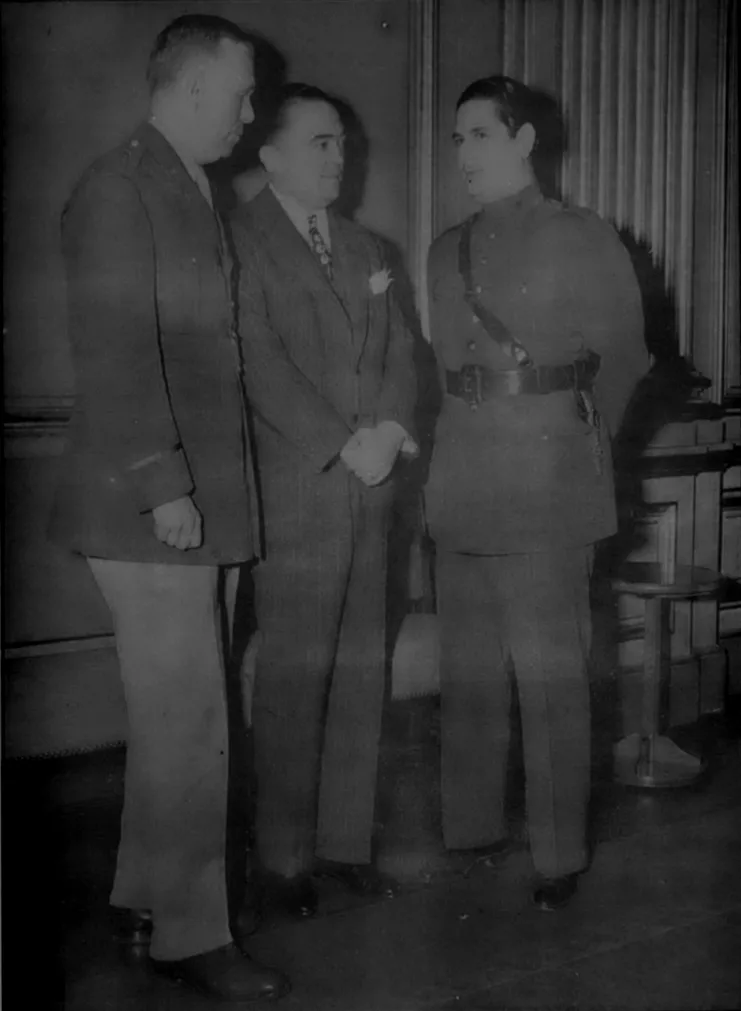

On 8 March 1971, a cab driver, a day-care provider and two professors broke into an FBI office in Media, Pennsylvania. They were part of a group of eight. Bonnie Raines had scouted the place posing as a student keen to become an agent. They picked the night of the Ali–Frazier fight, hoping everyone would be glued to the radio. They took every document in the place, and a photo of J. Edgar Hoover, but left the frame. More than 1,000 files went to newspapers. One carried a single word, COINTELPRO, which nobody understood yet. The files showed agents being told to enhance people's paranoia. The Post ran it anyway, though Nixon's people asked it not to. The FBI's manhunt, over 200 agents deep, never found a burglar.
Why it’s here: The proof was paperwork the believers stole themselves
Share this item

5 The CIA's fake vaccination drive in the hunt for bin Laden
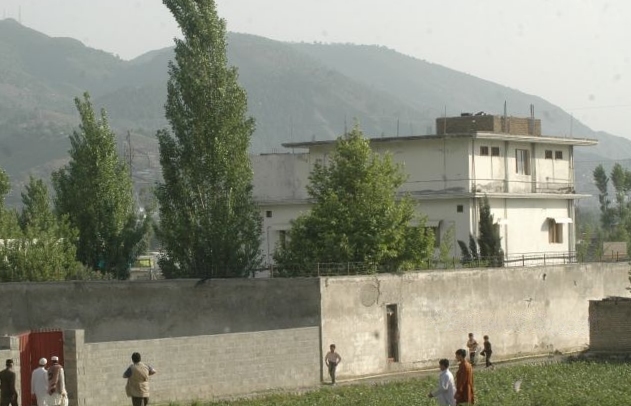

The CIA wanted a look inside a walled compound in Abbottabad, so it recruited a Pakistani doctor, Shakil Afridi, to run a hepatitis B vaccination campaign. The plan: get inside, vaccinate whoever lived there, and use their DNA to check whether they were bin Laden's family. The team announced free jabs and started in a poor neighbourhood, then moved closer after the first of three shots. A Pakistani official asked why anyone would hand out free vaccines in well-to-do Bilal Town. Afridi got temporary access but never saw bin Laden. The bill came later: gunmen killed polio health workers, the UN suspended a vaccination effort, and a court gave Afridi 33 years for treason. That was later overturned. US policy now bars the trick.
Why it’s here: A real spy trick with a real twist: it failed, and the damage outlasted the hunt.
Share this item

4 The Dalai Lama on the CIA payroll
When the Dalai Lama fled to India in 1959, the CIA set up a covert subsidy for him and his entourage. It paid $180,000 a year in the early 1960s, on top of $1.7 million a year for the wider exile movement. It was a stipend, not a spy's wage, and the paperwork says so: he does not account to us for this sum, and it is not used in our Tibetan operations. The exile government says it went on offices in Geneva and New York and on international lobbying. Elsewhere in the same programme: guerrillas in Nepal, training in Colorado, and Tibetans studying at Cornell. The documents came out in 1998. A holy man's allowance, run by the people who trained the guerrillas.
Why it’s here: The belief was broadly true, but the money was a stipend with no strings, not pay for spying.
Share this item

3 MKUltra: the CIA's drug-and-mind-control experiments
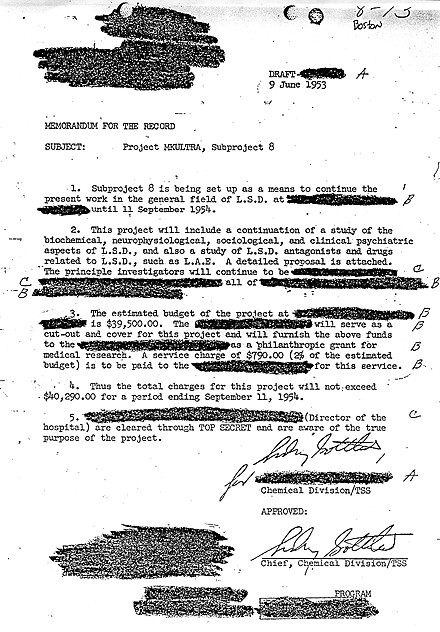

In 1953, the CIA heard the Soviets were buying LSD from a Swiss drug firm. So it launched MKUltra to find out whether a psychedelic could be a weapon. Allen Dulles approved it, and Sidney Gottlieb ran it. The CIA paid outside researchers, and some tested drugs on people who had no idea. Frank Olson, an Army scientist, was dosed in 1953 and later fell from a hotel window. Safe houses had bugs disguised as electrical outlets. Facing Watergate, Gottlieb had nearly every file destroyed. But seven boxes of financial records were misfiled, and in 1977 an employee answering a freedom of information request found them. The cover-up was beaten by bad filing.
Why it’s here: A cover-up undone by a filing error, and a real mind-control programme behind it.
Share this item

2 Area 51: the base the CIA finally admitted existed
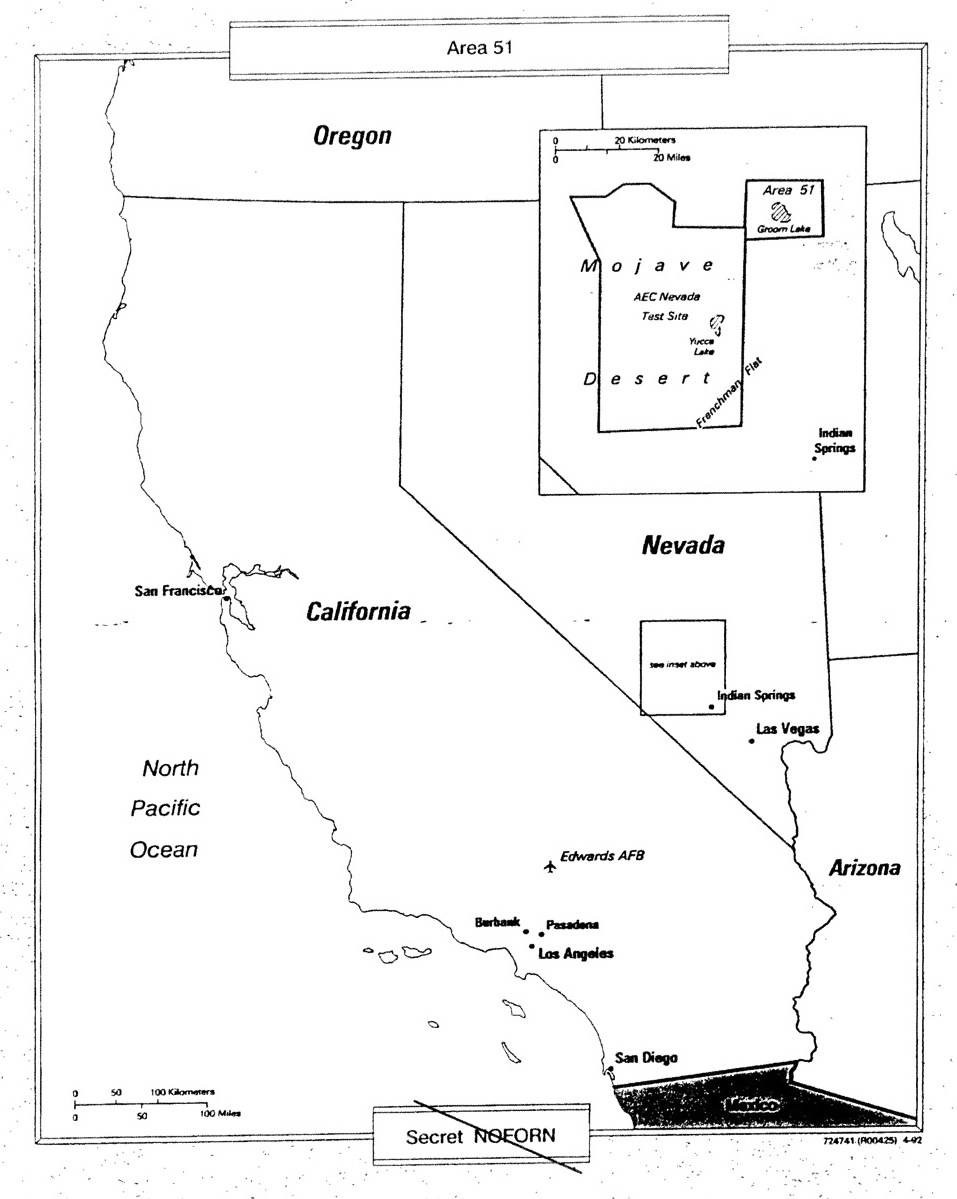

In April 1955, CIA man Richard Bissell scouted a dry lake called Groom Lake, about 80 miles north-west of Las Vegas, and decided it was the place to hide a new spy plane. The U-2 flew at 60,000 feet, higher than anything else then flying, and its silver wings caught the sun while the ground below sat in darkness. Airline pilots saw gleaming things in the sky, and the CIA's own history says U-2 testing led to 'a tremendous increase in reports of unidentified flying objects'. The air force's UFO investigators partly spent their days working out which sightings were really U-2s. In August 2013 the CIA's history of the programme was released, and the base was named. No aliens appear in it. Just a very good plane.
Why it’s here: The base is real, but the aliens were just a spy plane catching the light.
Share this item

1 Watergate: the smoking-gun tape
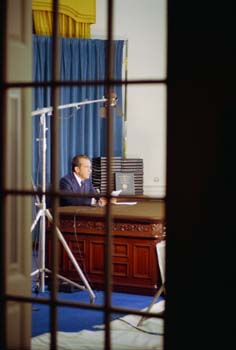

Six days after burglars were caught at the Watergate complex, President Nixon sat in the Oval Office with the tape recorder running. His chief of staff, Haldeman, said Walters of the CIA should call Pat Gray at the FBI and tell him to stay out of it. Nixon agreed to get the CIA to tell the FBI not to proceed with two interviews. He had taped his own cover-up. The Supreme Court ordered the tape released on 24 July 1974. The eleven Republicans who had voted against impeachment said they would change their votes. Nixon resigned on 9 August, the first US president ever to do so. Another tape, from 20 June, still has a section hidden under a buzz that decades of clean-up have failed to remove.
Why it’s here: The grandest fall on the list, brought down by the president's own recording.
Share this item

So the tinfoil hat was occasionally a sensible choice. Mostly it's still a hat, and the aliens are still a U-2. Still, ten real ones is a decent haul. Think we got the order wrong? Good. Start with number one.