


The best part of any legend is the bit where somebody finds out what actually happened. That's what we've ranked: the origin story, not the monster. Number ten involves two blokes from Southampton and a plank. Number one involves a crime wave that Victorian hospitals couldn't find a single victim of.
10 The crop circle men

One evening, two friends from Southampton, Doug Bower and Dave Chorley, had a drink and got talking about local tales of 'saucer nests'. They decided to make some. Early on they worked on hands and knees with an iron bar, which was slow. Then came the upgrade: a four-foot plank on a rope, plus a baseball cap with a wire through the visor to sight along. They would stand in the crowd when a new circle was 'discovered', admiring their own handiwork. In 1991 they confessed in a front-page story in the newspaper Today, then showed journalists and TV crews how it was done. Reports of crop circles went up. The confession just gave it more customers.
Why it’s here: A cracking confession, but crop circles feel more modern craze than old legend.
Share this item

9 Black Shuck
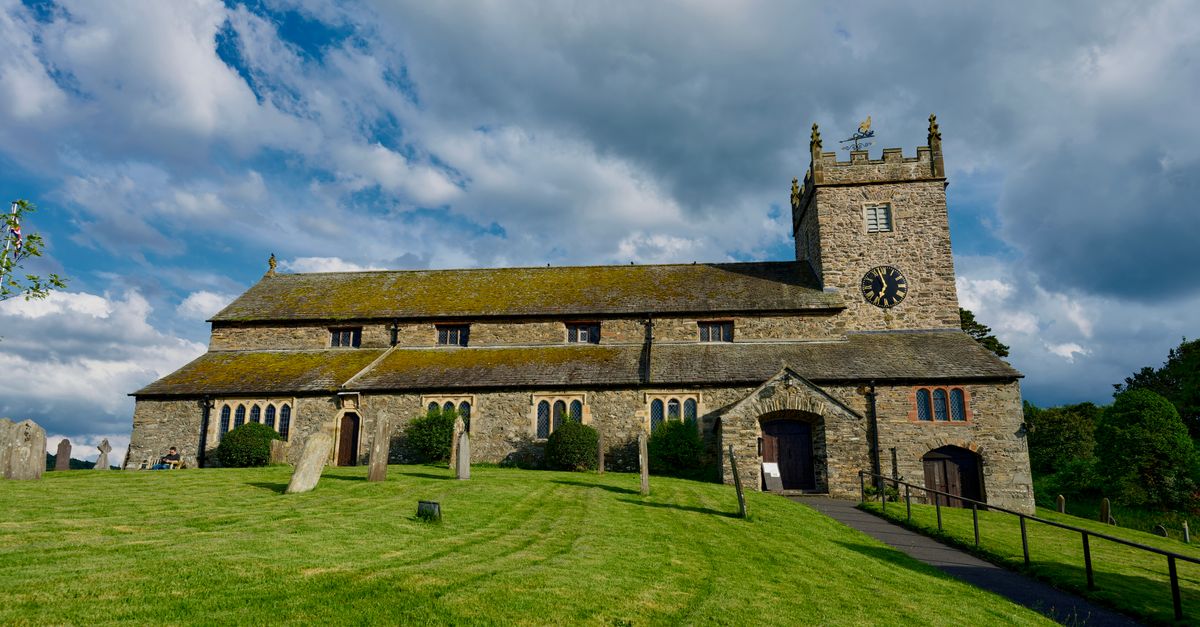
On 4 August 1577, a violent thunderstorm hit the Suffolk coast. A London clergyman and printing-house editor, Abraham Fleming, saw a story in it. His pamphlet had a title with no interest in brevity: 'A straunge, and terrible Wunder wrought very late in the parish church of Bungay'. In it, a huge black dog runs into St Mary's, Bungay, in the middle of the service. Folklore sites say it was the size of a calf and the air went cold where it passed. Historians tend to see a real storm folded into a supernatural tale. The famous name, 'Black Shuck', first appeared in print in 1850, in Notes and Queries, nearly 273 years after the storm. Bungay put the dog on its coat of arms anyway.
Why it’s here: The truth is a storm, a preacher and a pamphlet, and the famous name arrived centuries late.
Share this item

8 The Surgeon's Photograph (Loch Ness)

In 1933 the Daily Mail hired big-game hunter Marmaduke Wetherell to find the Loch Ness monster. He came back with footprints, which Natural History Museum researchers concluded were made with a dried hippo's foot, the sort people kept umbrellas in. Wetherell needed a better idea. His stepson Christian Spurling, a skilled model maker, fixed a wood-putty neck and head to a toy submarine from Woolworths. Dr Wilson, a good and honest doctor, was enlisted to hand the photos in. He refused to put his name to them, so it became the Surgeon's Photograph. The Mail ran it on 21 April 1934. Spurling told researchers about it in the early 1990s, and in 1994 the world learned the truth. The photo is still the monster's best-known face.
Why it’s here: The most famous monster photo ever taken turns out to be a toy from Woolworths.
Share this item

7 Spring-Heeled Jack
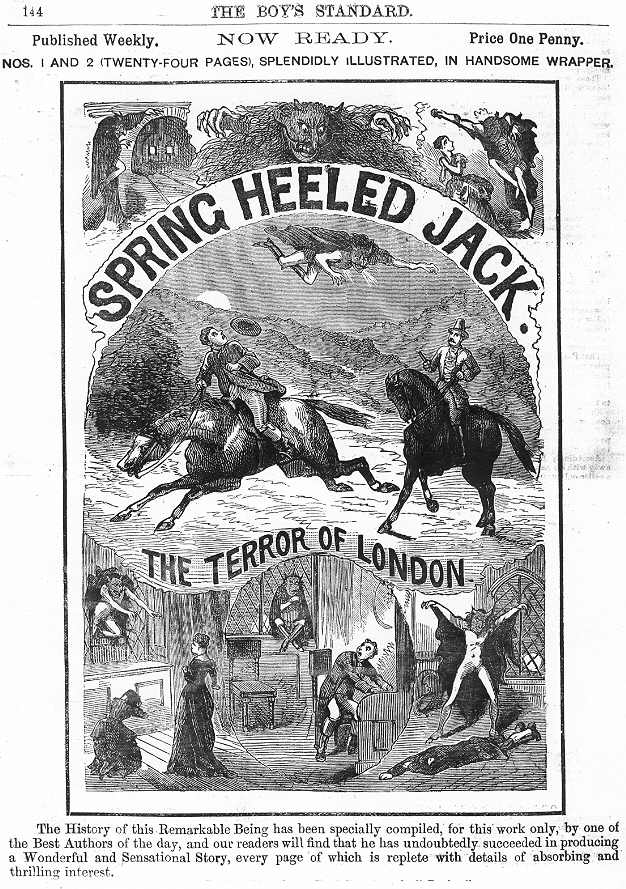

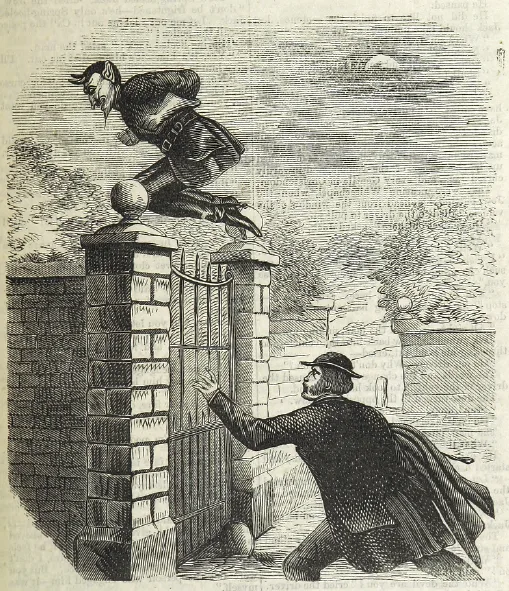
In 1838, Jane Alsop answered her door to a man shouting that Spring-Heeled Jack had been caught, and asking for a light. She fetched a candle. He blew blue flames in her face and scratched her with metal claws. Her story made headlines, and suddenly everyone had met him. Some 'sightings' only appeared in print decades later. London's Lord Mayor was sceptical, but the letters kept coming. Then the penny dreadfuls took over, dozen-page pamphlets sold for a penny, and Jack became a costumed man in special boots. The more he starred in fiction, the fewer people saw him. Nobody ever caught him. He just got a better agent.
Why it’s here: A cracking set-up, but the real origin is murky, so the myth-making is the story.
Share this item

6 The Coco Chanel lampposts

Walk round Westminster and you'll spot lampposts stamped with a double C. Tour guides will happily tell you why. The Duke of Westminster, madly in love with Coco Chanel, had her initials put up beside his own W crest for Westminster. Romantic, isn't it? The affair was real: they are said to have met at a party in Monaco in the mid-1920s, and it lasted until the early 1930s. He gave her land on the French Riviera. He did not give her street furniture. The lampposts went up in the 1950s, long after the romance, and the double C stands for City Council. The council still gets plenty of calls about it.
Why it’s here: A tidy debunk where the truth is duller than the myth, but a real affair keeps it charming.
Share this item

5 The Green Children of Woolpit
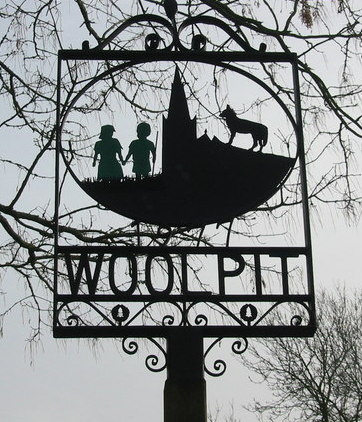

Sometime in the 12th century, two children turned up beside a wolf pit in Woolpit, Suffolk. They had green skin and spoke a language nobody knew. Taken in by a local knight, Sir Richard de Calne, they refused every scrap of food for days, until someone showed them raw broad beans. The boy fell sickly and died around the time of his baptism. The girl lost the green, learned to eat like everyone else, and married a man from King's Lynn. She said they came from a twilit land called Saint Martin's, and had followed a sound like church bells while minding their father's sheep. One theory is Flemish orphans with anaemia. The chronicler William of Newburgh, famously fussy, put it in his history anyway.
Why it’s here: A cracking story whose origin is still an open guess, so the truth never quite beats the myth.
Share this item

4 The Cottingley Fairies
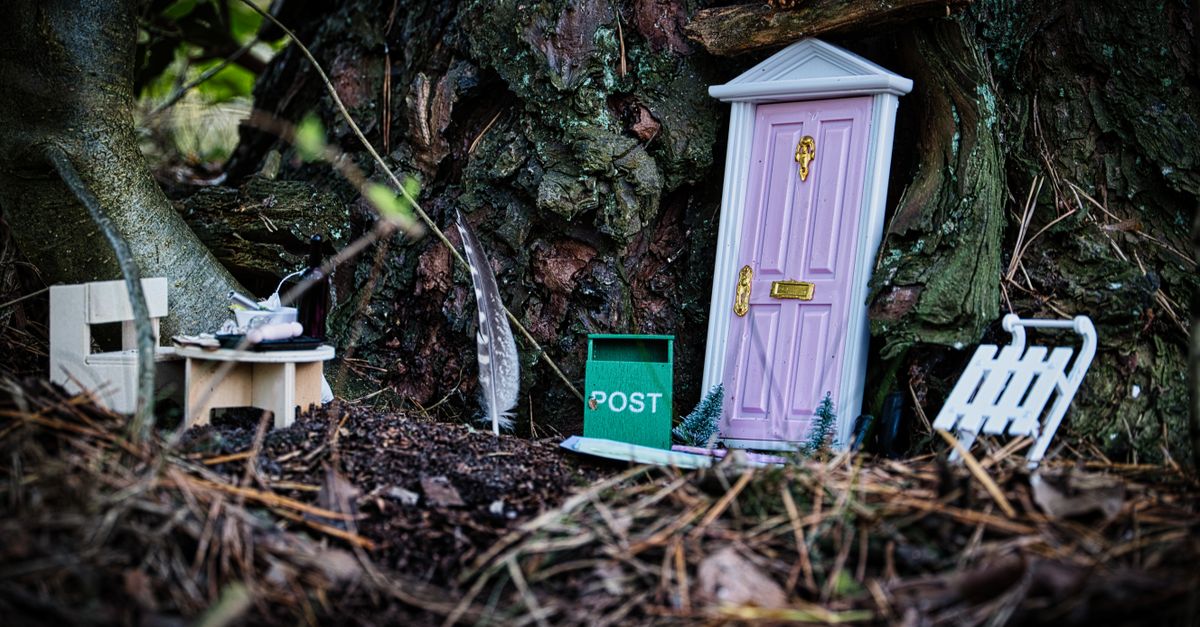
In 1917, nine-year-old Frances Griffiths came home from the beck in Cottingley with wet shoes and an excuse: she'd gone to see the fairies. Nobody believed her. So she and her cousin Elsie Wright borrowed Elsie's father's camera. He was an amateur photographer, so it was a proper one. Elsie drew fairies, copied from Princess Mary's Gift Book with wings added, then cut them out, pinned them to hatpins and posed them in Cottingley Glen. Arthur Conan Doyle, creator of Sherlock Holmes, ran the pictures in the Strand Magazine. In the gnome photo a hatpin tip shows in the middle of the creature. Doyle took it for a belly button. Elsie confessed in 1981. Frances admitted it too, but swore the last photo was real.
Why it’s here: A children's-book trick that fooled the man who created Sherlock Holmes, with a last photo one cousin never gave up.
Share this item

3 Jimi Hendrix and London's parakeets
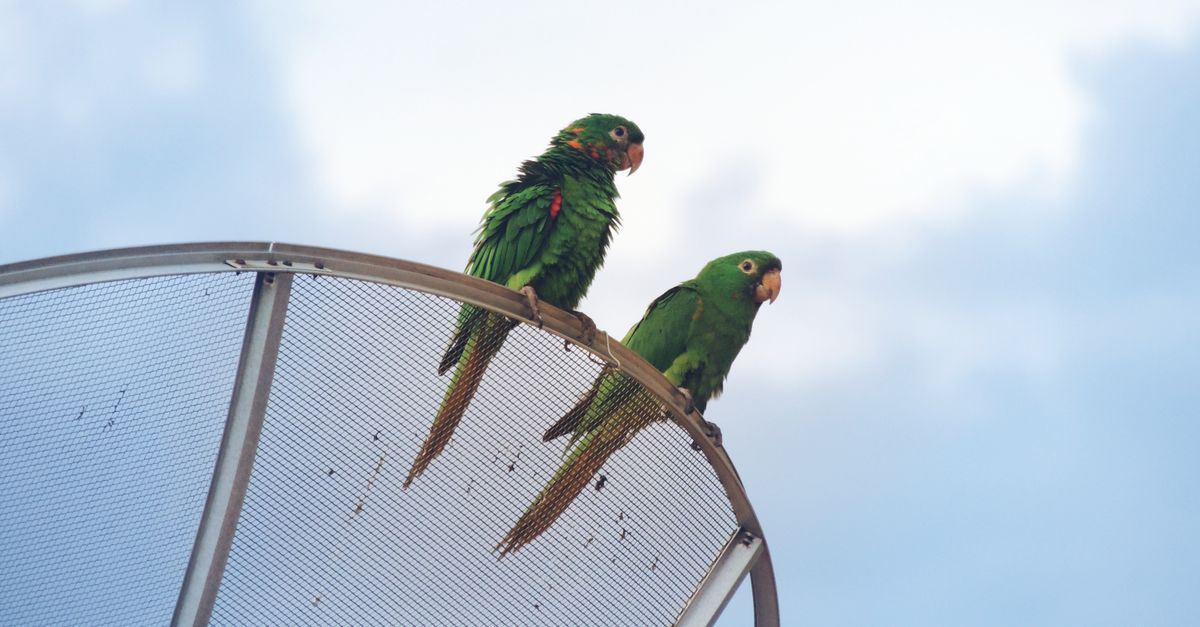
The legend is lovely. In 1968, Jimi Hendrix strolls down Carnaby Street, opens a cage and frees a pair of parakeets, Adam and Eve, as a symbol of peace. Their descendants now squawk across London. Sadly, a 2019 study found no news coverage of any such release. The scientists tested the story with geographic profiling, a technique built to rank suspects in serial crime cases, and fed it half a century of sightings. The birds came from several places, with clusters in Croydon and Dartford. Parrot-fever scares probably nudged worried owners and traders to let birds go. The truth is less psychedelic: lots of ordinary people, lots of open cages.
Why it’s here: The myth is neat, and the science that tests it borrows from crime detection.
Share this item

2 The American who 'bought the wrong bridge'


By the 1960s, London Bridge was sinking into the Thames at an inch every eight years. Ivan Luckin, an advertising executive turned councillor, hit on a plan: sell it. Robert McCulloch, who had founded Lake Havasu City in the Arizona desert and wanted a landmark to put it on the map, bid $2.46 million. That was double the $1.2 million demolition estimate, plus $1,000 for every year of his age. The stones were numbered, shipped via the Panama Canal and trucked to Arizona. Officials declared it the world's largest antique ever sold, so it entered the US without a tariff. Then they rebuilt it on dry land and dug the river underneath. The myth says he thought it was Tower Bridge. Asked, Luckin replied "Of course not."
Why it’s here: The true story, with its price formula and a river dug afterwards, beats the myth outright.
Share this item

1 The Great Garroting Panic of 1862

In 1862, some Londoners started wearing neckwear built for a fight. Studded leather collars. Cravats with razor blades sewn in. Designs for hulking collars with large spikes were patented. All because of garrotting: choking someone with an arm or a scarf until they couldn't resist, then emptying their pockets. The papers made it sound like a strangler lurked on every dark street. Parliament listened, and in 1863 the Garotter's Act was quickly passed, restoring flogging for violent robbery. Meanwhile, hospitals confirmed that garrotted victims weren't turning up on their wards, and no deaths or serious injuries were ever reported. Punch parodied the spiked collars. Then the papers found new stories, the reports dried up, and the word stuck around anyway. The fear was bigger than the crime. The cravats were real.
Why it’s here: The panic outran the crime, and the truth left real razor-blade cravats behind.
Share this item

So that's ten legends, and in most of them the truth turned out stranger, or at least funnier, than the myth. Somewhere a bloke is still angry about a hatpin. Tell us where we've got the order wrong, and send the plank one to a mate.