

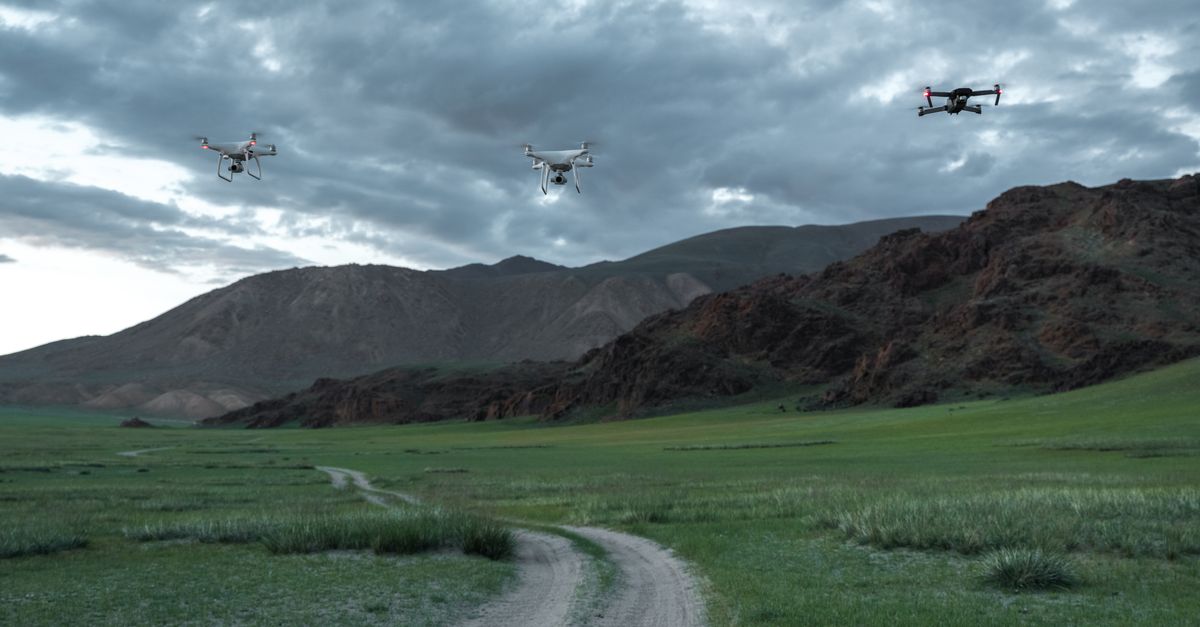
On 23 August 2026, two drones flew seven missions over Alaska's Kenai Peninsula and fired 19 flares of silver iodide into the clouds, about 374 grams in all. The next day their owner, the California start-up Rainmaker, published a report saying the clouds had produced roughly 19 million gallons of extra precipitation in about three hours.
The chemistry isn't the controversial part. Silver iodide gives supercooled water in a cloud something to freeze onto, so ice crystals grow and fall. That bit is old science. The hard bit is proving how much of what came down was yours.
You can't run the same cloud twice. There is no second 23 August in which the drones stayed at home, so there's nothing to compare against. It's a bit like taking a paracetamol, feeling better by teatime and giving the pill all the credit, when you might have perked up anyway. Rainmaker's answer was to work from the local weather radar. It picked out what it calls seeding signatures, turned radar echoes into precipitation with 27 different conversion formulas and subtracted a background level. Its own report notes that the radar's lowest beam was about 1,800 to 2,200 metres up, and that the estimate doesn't account for what happened between there and the ground. There were no rain gauges. The 19 million gallons, then, were counted about 2km above Alaska. How much of it reached Alaska nobody has said.
No Alaska or federal agency has checked the figures. Katja Friedrich, a cloud physicist at the University of Colorado Boulder, wants formal peer review, because otherwise 'it's just numbers on a piece of paper'. Rainmaker's own founder, Augustus Doricko, said in 2024 that measuring it had long been 'totally unquantifiable', though he thought that was on its way to being solved. Investors seem persuaded. In October 2026 Rainmaker announced a $100m funding round.
The people under the clouds were less impressed, mainly because nobody asked them. Residents and the borough itself learned about the test on social media once it was over. Borough mayor Peter Micciche says the borough had been told the flight would carry no payload and would test how the drones coped with bad weather. He called the company deceptive. Doricko pointed out that there was no local regulation of weather modification to break. Not breaking a rule nobody has written is a low bar, and he later accepted that the borough could have been told earlier. Rainmaker says it had a letter of no objection from Alaska's Department of Natural Resources and never operated on borough land.
The borough assembly has since asked state lawmakers to ban or regulate weather modification, and advanced an ordinance that would require permits listing the chemicals, the flight times and the area expected to be affected. If it goes through, the next company to try will have to say in advance which bit of the Kenai it expects to get wet. Then somebody can go and stand in it with a rain gauge.