

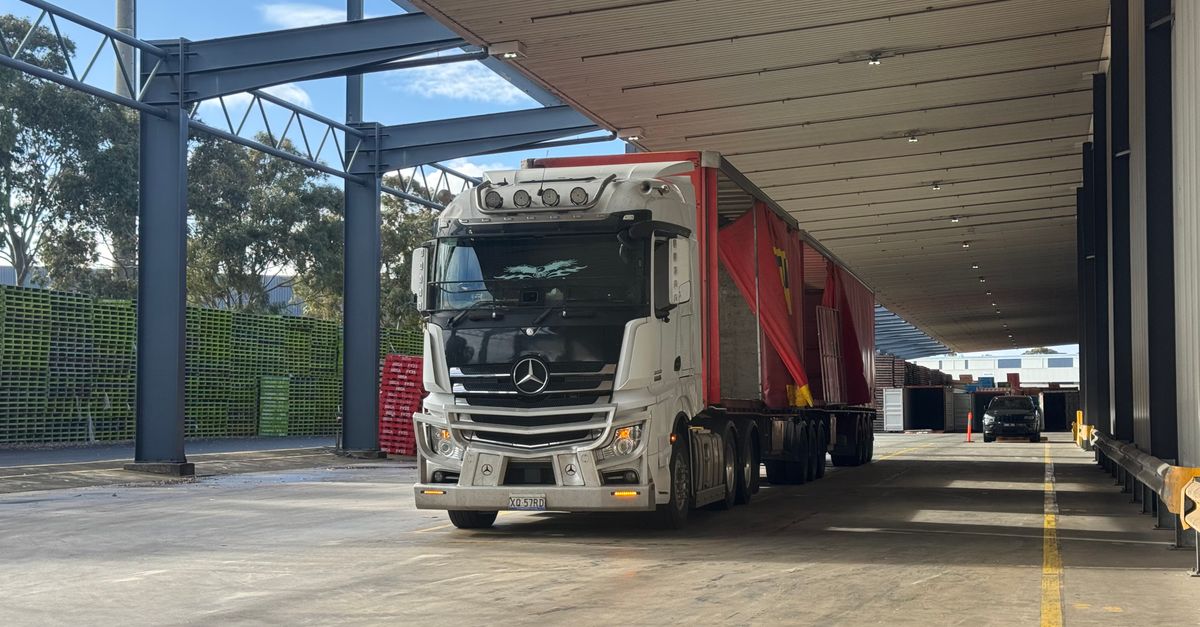
The driverless lorry revolution in Marysville, Ohio, currently runs to two lorries.
They're electric trucks built by the Swedish company Einride, and since September they have been hauling freight for EASE Logistics on scheduled routes between its warehouses, across company property and along local public roads. Nobody sits inside, because there's nowhere to sit: the trucks have no cab. A remote operator watches each one from somewhere else and can step in if needed, a bit like a driving instructor with dual controls, if the instructor were in another building.
Two sounds modest, and it's meant to. The run is part of the $8.8m Truck Automation Corridor Project, a multi-year study launched in 2021 by the Ohio and Indiana transport departments and DriveOhio. Einride and EASE are logging miles driven, loads moved and how much of the time the trucks are actually working, and the numbers will decide what happens next.
Britain is a good way further back. Here, a lorry with nobody aboard has no legal route onto the road yet. The Automated Vehicles Act 2024 lays the foundations for authorising self-driving systems, but freight still needs secondary legislation and detailed rules that haven't been written. A truck without a cab doesn't even have a steering wheel for the old rules to insist someone holds.
The plan, when it comes, is cautious. The eFREIGHT Autonomous consortium, led by Voltempo and chaired by Sir Vince Cable, spent nine months on a feasibility study and concluded the place to start is hub-to-hub motorway runs between logistics centres, plus short shuttles linking ports, railheads and distribution hubs, with real-world trials targeted from 2027. Nobody is proposing to begin on the M6 on a wet Friday, and quite right too.
The trouble is the people already in the cabs, who aren't getting any younger. Logistics UK says 61.6% of HGV drivers are 45 or over, and 21.1% are 60 or over. Only 4.2% are aged 16 to 24, against 11.7% of the working-age population as a whole. For every young driver climbing into a cab, there are about five over 60 thinking about climbing out.
Caution is probably the right call with a 40-tonne lorry. It just means Britain will be relying on those drivers for a good while yet, and asking them to hang on until the paperwork catches up. In Marysville, the two lorries have no such worries. They haven't even got a seat.